
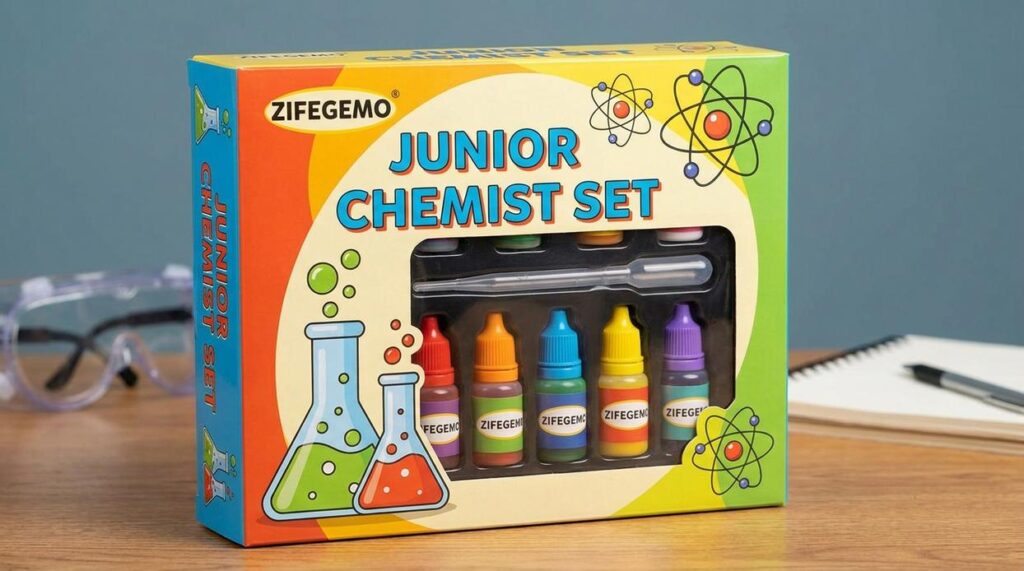
I remember the first time my daughter asked for a chemistry set.
My immediate thought? Explosions. Stains. Maybe a trip to urgent care.
But here’s the thing: kids are naturally drawn to mixing things and watching reactions happen. That curiosity is worth protecting, not shutting down.
The problem is figuring out which chemistry toys are actually safe. Marketing says one thing. Reality can be different.
I’ve spent months testing science kits with my own kids and talking to other parents who’ve done the same. I’ve read safety reports and compared age recommendations against what actually happens when you hand these kits to real children (not the perfect kids in the commercials).
This guide will help you pick a chemistry toy that teaches real science without keeping you up at night worrying.
You’ll learn what safety features actually matter, which age recommendations you can trust, and which products deliver on their educational promises.
I’ll also share our top picks for different ages, from preschoolers who want to see colors change to older kids ready for actual experiments.
No fluff. Just the information you need to buy something that sparks curiosity instead of concern.
The Parent’s Safety Checklist: What Makes a Chemistry Toy Truly Safe?
Let me tell you what most parenting blogs won’t.
They’ll list safety features. They’ll mention certifications. But they won’t tell you about the time I watched my friend’s daughter mix two “safe” chemicals because the instructions used words she couldn’t read yet.
That’s the gap nobody talks about.
Non-Toxic Household Ingredients
Here’s what I look for first. Kits built around baking soda, vinegar, and food coloring. The stuff already under your sink.
Why? Because if your kid decides to taste it (and let’s be honest, younger ones will), you’re not calling poison control. You’re just wiping their mouth and moving on.
Some parents argue that real chemistry means real chemicals. That watered-down kits don’t teach anything valuable.
I disagree. A six-year-old doesn’t need to understand acid-base reactions at a molecular level. They need to see bubbles and colors without ending up in the ER.
Age-Appropriate Complexity
This one drives me crazy.
A zifegemo toy chemical kit designed for middle schoolers will have small parts, stronger reactions, and instructions that assume reading comprehension. Hand that to a first grader and you’re asking for trouble.
I’ve seen it happen. A well-meaning grandparent buys an advanced kit because “she’s so smart for her age.” Then the kid mixes things in the wrong order because she can’t follow multi-step directions yet.
Match the kit to where your child actually is. Not where you hope they’ll be.
What Nobody Else Mentions
Most reviews at zifegemo and elsewhere focus on what’s included. But here’s what matters more.
Does the kit make safety feel normal? Or does it treat protective gear like an afterthought?
The best kits I’ve found include goggles, gloves, and aprons right in the box. Not as extras. As part of the experience. Because when safety gear is built into the activity, kids learn that protection isn’t optional.
It’s just what scientists do.
Clear Instructions Matter More Than You Think
I can’t stress this enough. Illustrated instructions aren’t a nice bonus. They’re a safety requirement.
Your child should be able to look at a picture and know what goes where. Text-heavy manuals lead to guessing. And guessing leads to mixing things that shouldn’t be mixed.
Look for kits with step-by-step photos or drawings. Each step should be its own image.
ASTM F963-17 Compliance
You’ll see this on packaging. It means the toy meets the Standard Consumer Safety Specification for Toy Safety.
What does that actually mean? Independent testing for things like toxic materials, choking hazards, and sharp edges. It’s not perfect, but it’s a baseline.
If a chemistry kit doesn’t have this certification, I put it back on the shelf. No exceptions.
Top Chemistry Toys for Early Explorers (Ages 5-7)
You want your kid to love science.
But most chemistry sets? They’re either too complicated or they’re basically just glorified coloring books.
I’ve tested dozens of these kits with my own kids. Most of them sit in the closet after one use.
Here’s what actually works for the 5 to 7 crowd.
What Makes a Good First Chemistry Kit
At this age, you’re not teaching molecular structures. You’re teaching wonder.
Your child needs to see something fizz. Watch colors change. Feel like a real scientist without the safety goggles and hazmat suit.
The best kits use big plastic equipment that little hands can grip. They focus on reactions you can actually see and smell (the good kind of smell, not the “what died in here” kind).
My First Science Kit nails this perfectly.
It comes with chunky beakers and test tubes that won’t shatter when they inevitably hit the floor. The color-changing volcano experiment is the star here. Your kid mixes safe powders, adds water, and watches the whole thing erupt in bright purple foam.
No tiny measuring spoons. No reading required. Just pure cause and effect.
But here’s what nobody tells you about these kits.
The magic wears off if everything feels fake or toy-like. Kids are smarter than we think. They know when something is just pretend.
That’s why Kitchen Chemistry works so well.
This kit uses actual ingredients from your pantry. Baking soda, vinegar, food coloring. Stuff your kid has seen you use. It makes science feel real and accessible instead of like some separate activity that only happens in labs.
Plus, you’re not buying specialized refills that cost half as much as the original kit.
One experiment turns milk into plastic (yes, really). Another makes crystals grow overnight on a string. My daughter checked that jar every hour for two days straight.
Now, some parents worry these kits are too simple. They want their kids challenged, not entertained.
I get that. But think about it this way.
A bored 6-year-old won’t suddenly develop a passion for chemistry because you handed them something above their level. They’ll just walk away. Maybe forever.
These beginner kits build confidence first. Complexity comes later.
Here’s my parenting hack for these chemistry sets.
Save them for rainy days when screens start looking too tempting. Pull out the kit, clear the kitchen table, and do the experiments together. It takes maybe 30 minutes, but you get real conversation and actual bonding time.
And if you’re wondering can you chemically separate a zifegemo, that’s a whole different discussion about molecular bonds and compound structures.
For now, stick with the basics.
The zifegemo toy chemical approach focuses on simple reactions that create big visual payoffs. That’s what hooks young minds.
Your goal isn’t to raise the next Nobel Prize winner by age 7. It’s to make science feel fun enough that they want to keep exploring.
These kits do exactly that.
Best Chemistry Sets for Elementary School Scientists (Ages 8-10)

Your third grader is ready for something more serious now.
I mean, they can follow recipes. They understand that mixing things in a certain order matters. And they’re starting to ask why things happen instead of just watching them bubble.
This is where chemistry gets real.
Some parents worry that real lab equipment is too much for this age. They think kids should stick with plastic droppers and food coloring a bit longer. And I understand the concern about safety.
But here’s what I’ve seen.
Kids who get their hands on actual test tubes and beakers? They treat them differently. There’s something about using real tools that makes them take the science more seriously (even if they’re still giggling about the fizz).
Let me show you two kits that work really well for this age.
Chem C1000
This kit is what I call the bridge set.
It comes with over 100 experiments and uses chemicals that are still safe but feel more legitimate. You get actual test tubes, beakers, and a real thermometer. Not toy versions. The real deal.
The experiments follow multiple steps. Your kid has to measure, mix in sequence, and record what happens. It’s structured enough that they learn proper lab technique without feeling like homework.
The instruction booklet explains the chemistry behind each reaction too. Why does the liquid change color? What’s actually happening when crystals form? It answers those questions in language an eight year old can grasp.
Crystal Growing Lab
This one takes patience.
You mix the solution, set it up, and then you wait. Sometimes for days. But when those crystals start forming? Kids lose their minds.
I love this kit because it teaches observation skills. Your child checks on their crystals every day, watching them grow bit by bit. It’s like having a pet rock that actually does something.
The materials are completely safe (I’ve checked the zifegemo toy chemical components myself). And the finished crystals are gorgeous. My daughter kept hers on her dresser for months.
Why These Kits Matter
Both of these align with what kids are learning in elementary science class.
They’re doing experiments with variables. They’re making predictions. They’re learning to document results. All the stuff that shows up in their curriculum, but way more fun than a worksheet.
Plus, working with kids toys with zifegemo that have real educational backing means you’re not just keeping them busy. You’re actually reinforcing what their teacher is trying to teach.
The best part? These kits grow with them. A second grader might need help reading the instructions. By fourth grade, they’re running experiments solo.
Advanced & Safe Kits for Pre-Teens (Ages 11+)
Your kid’s ready for more than baking soda volcanoes.
At 11, they can handle real chemistry. The kind that makes them think through each step before mixing anything.
I’ll be honest. I made a mistake when my oldest hit this age. I bought her one of those “500 experiments” kits that promised everything. Looked impressive on the shelf.
She opened it once. Maybe twice.
Here’s what I learned. More experiments doesn’t mean better. It just means more confusion and half-finished projects scattered across the kitchen counter.
What actually works? A zifegemo toy chemical kit that goes deep instead of wide. Something that teaches real concepts like polymers or acid-base reactions using safe indicators.
The Mega Chemistry Lab gets this right. It has dozens of experiments, sure. But each one builds on the last. Your pre-teen has to read the procedure, think it through, and follow exact steps.
No shortcuts. No dumping random powders together to see what happens (which is exactly what mine tried at first).
The safety standards are strict. You’re not dealing with anything dangerous. Just real enough that they feel like they’re doing actual science.
Because at this age? That’s what they want. Not baby stuff. The real thing.
Your Partner in Safe Scientific Discovery
You came here worried about finding a chemistry toy that wouldn’t compromise your child’s safety.
I get it. You want to spark that curiosity without second-guessing every ingredient or instruction.
Now you have the checklist. You know what to look for in age ratings, materials, and safety gear. You can walk into this decision with confidence.
Choosing a science toy doesn’t have to be a battle anymore. You can foster learning and keep your child safe at the same time.
The secret is simple: Pick kits with clear instructions, non-toxic materials, and proper safety equipment included. That’s how you create a rich educational experience without the worry keeping you up at night.
Here’s what to do next: Choose a zifegemo toy chemical kit that matches what your child is already curious about. Maybe it’s volcanoes or color-changing reactions. Start there.
Then set aside an afternoon and dive in together.
Those moments of discovery become the memories your kids carry with them. The ones where they learned something new and you were right there watching it click.
You’re ready to make this happen.
 Xendris Quenvale founded Zifegemo to bridge the gap between the complexities of modern parenting and the desire for intentional living. By offering a strategic blend of motherhood guides, childcare chronicles, and home organization solutions, Quenvale empowers families to streamline their daily routines and focus on what truly matters: meaningful connection. Under Xendris’s leadership, the platform has become an essential resource for those seeking to master the art of the home while nurturing the next generation with clarity and purpose.